AI Isn't Coming for Your Agency. It's Coming for the Part That Didn't Matter Anyway.
There’s a version of this conversation happening in every agency right now. Some version of: is AI going to replace us? The question is understandable. The answer, as we see it, is no. But it’s also the wrong question. The more useful one is: what were you actually selling?
Some of what agencies charged for is now cheap
This part is true and worth saying plainly. Stock imagery is almost irrelevant. First drafts of copy, concepts, and motion explorations are dramatically faster. Research that used to take a junior strategist two days can be done in two hours. Production tasks that justified certain fee structures no longer do.
If an agency’s value was primarily in execution volume, the number of hours it takes to produce a thing, that model is under real pressure right now.
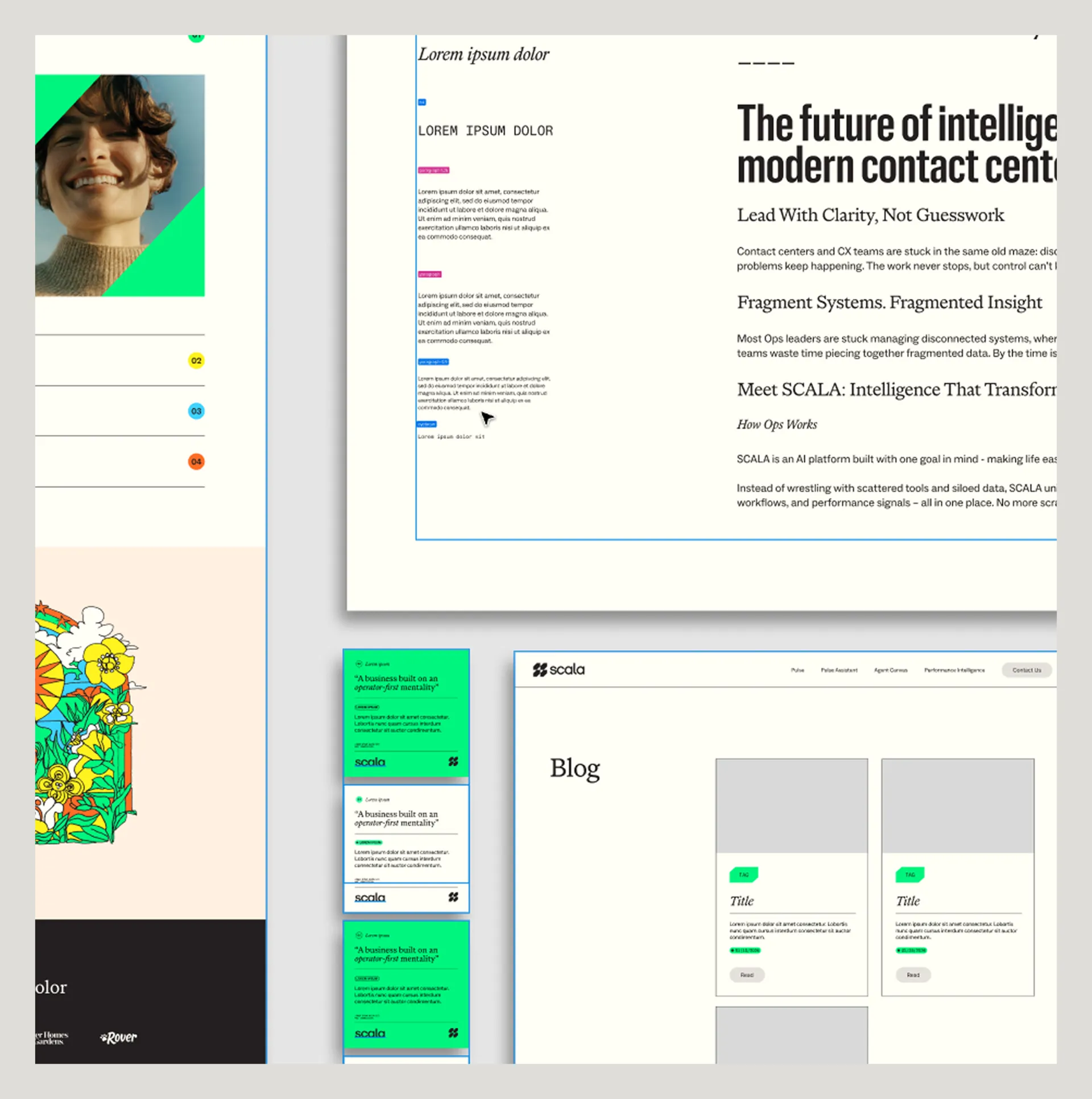
We’ve felt this in our own work. When we launched SCALA.AI’s brand and website, the research and competitive landscape phase that might have taken a week was compressed significantly using AI tools. That time didn’t evaporate. It went into sharper strategy and more iteration on the work that mattered. The output was better. The timeline was shorter. That’s the version of this story we’re living.
What hasn’t changed
Judgment hasn’t changed. Taste hasn’t changed. Neither has knowing why a brand decision matters for this specific client at this specific moment.
AI can generate a first draft. It cannot tell you whether the tone is right for a company that just went through a leadership change, or whether a visual direction that tested well in another category will land differently in yours. It cannot build the trust that makes a client show you the real problem instead of the stated one.
The agencies that were leading with deep client knowledge, honest creative judgment, and earned trust are fine. Better than fine, actually. They’re faster now.
The agencies that were leading with process (the decks, the frameworks, the billable-hours machinery) are in trouble. Because process is exactly what AI can replicate.
Where AI is actually helping us
There are a few places where AI has meaningfully changed how we work, and they’re worth being specific about.
Production speed is the obvious one. More options on the table, faster. When we’re developing motion concepts for a client or exploring visual directions, we can run more experiments in a week than we could in a month two years ago. That benefits the client directly: more informed decisions, fewer rounds of revision on the wrong direction.
Research velocity is underrated. Understanding a client’s competitive landscape, audience signals, or category dynamics used to require significant upfront time. We can move from brief to informed perspective faster, which means strategy work starts from a better foundation.
Code generation has changed how we approach web builds. Not everything, and not without oversight. But for component-level work and prototyping, the speed is real. For a client like Slate Technologies, where we’re producing ongoing video content at scale, AI-assisted workflows let a small team punch well above what the headcount would suggest.
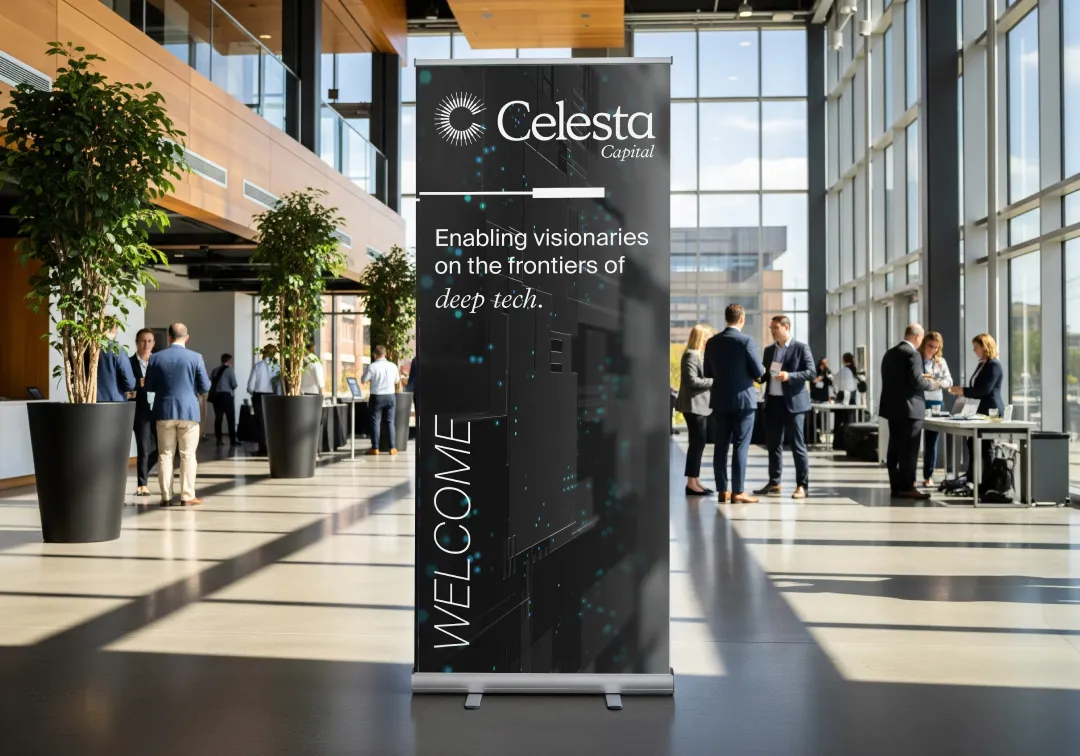
We also used it during the AIIR Products trade show engagement, iterating on interactive concepts for a kiosk experience faster than a traditional production cycle would have allowed. The human judgment about what would actually work in a trade show environment came from us. The iteration speed came from the tools.
Two kinds of agencies are emerging
This is where we’re honest about the split we’re watching happen.
There are agencies using AI to deliver better, faster work at the same or better value for clients. They’re more competitive, not less. Their embedded knowledge and creative judgment get amplified by the tools. The output improves. The relationship deepens.
And there are agencies ignoring it, or using it badly, or pretending it doesn’t apply to them. Some of them have been coasting on reputation and inertia. They’re about to find out that their moat was shallower than they thought.
The telling signal isn’t whether an agency uses AI. It’s whether they use it with actual creative direction behind it. AI in the wrong hands produces faster mediocrity. A generic AI-generated brand concept is still generic. It just arrives more quickly. AI paired with strong strategic thinking and real client context produces something different: exceptional work, faster.
What clients should actually be asking
The question “are you using AI?” isn’t the right one. Almost everyone will say yes now, whether or not it’s true in any meaningful way.
The better questions: How are you using it, and to what end? Where does AI-generated work enter your process, and who’s making the judgment calls about what’s good? What’s the creative oversight model?
An agency that can answer those questions specifically, with examples, is actually integrating AI into a thoughtful process. An agency that says “we use AI tools to enhance our workflow” and can’t go further than that is probably using it to look current without having done the hard work of figuring out where it actually helps.
Why being embedded changes the calculation
The value of an embedded agency model has always been institutional knowledge. We know your brand, your stakeholders, your past decisions and why they were made, the competitive context you operate in. That accumulation of context is what makes our work better over time, and it’s what a vendor brought in for a one-off project simply doesn’t have.
AI amplifies that advantage. An AI-assisted first draft rooted in six months of deep brand immersion is dramatically better than a generic first draft. Same tool, completely different inputs, and the output reflects it.
The longer we work with a client, the more powerful our AI-assisted work becomes, because the context we’re feeding it is richer, more specific, and more accurate. This isn’t true of a transactional agency relationship. You can’t automate your way to institutional knowledge. You have to earn it.
Where we’re taking this
We’re not triumphant about any of this. Creative work has always been about getting to the right answer for the right client, and the tools for doing that keep changing. This is a meaningful change. It’s also clarifying: it shows who’s been doing the real work and who’s been doing the process around the work, and which agency models were always more fragile than they appeared.
For Goodthings, the answer is straightforward: we use the tools that make the work better and faster, we apply real judgment to everything that comes out of them, and we stay close to our clients, because that’s where the actual value has always lived.